

If you’ve searched “best 4 person tent” this week, you’ve probably noticed something annoying: half the results are backpacking tents built to shave ounces off a hiker’s pack, not to hold a family and their gear at a drive-up campsite. That’s not what most of us need. If you’re loading a tent into a trunk instead of a pack, you want something that pitches fast, survives a surprise rain shower, and doesn’t leave your kid’s elbow in your ribs all night.
I’ve spent the last few weeks digging through specs, real owner complaints, and current prices on the 4-person tents that actually make sense for car camping — not the ultralight stuff. I’ve also spent time pitching and sleeping in most of these myself over the past couple of seasons. Here’s where I landed.
This article contains affiliate links. If you purchase through these links, I may earn a small commission at no extra cost to you. My recommendations are based on personal experience and thorough testing. Read my full disclosure for details.
Best 4 Person Car Camping Tents:
- Best Overall: The North Face Wawona 4 — the most livable space for the money
- Best Budget: Coleman Sundome 4 — under $150, does the basics well
- Best for Bad Weather: ALPS Mountaineering Lynx 4 — genuinely waterproof, dual vestibules
- Easiest Setup: Coleman Skydome 4 with Full-Fly Vestibule — integrated poles, beginner-proof
- Best for Families with Young Kids: Kelty Daydreamer 4 — blocks morning light so nobody’s up at 5:45 a.m.
- Best Splurge: Marmot Limestone 4P — lifetime warranty, built to outlast the others
The 6 Best 4-Person Tents in a Nutshell
The 6 Best 4 Person Tents in a Nutshell

Are you in a rush? Here’s my quick answer for the best 4 person tent, by category:
1. The North Face Wawona 4 — Best Overall Camping Tent
If you want the single best 4 person tent for a family camping a handful of weekends a year, start here.
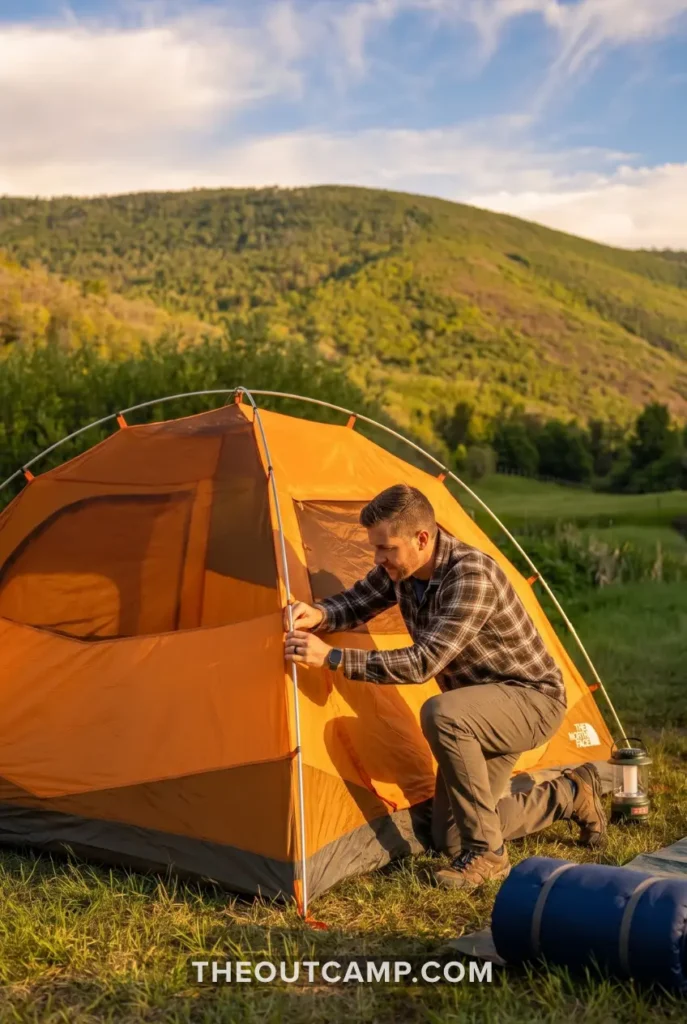
The North Face Wawona 4 Camping Tent Specs
- Size: 96 x 90 in, floor area 58.3 sq ft
- Packaged Weight: ~13 lb
- Entrances: 2 doors
- Windows: Mesh windows throughout, mesh canopy top
- Vestibules: 2 (front ~27.6 sq ft, rear ~14.9 sq ft)
- Free Standing: Yes
- Season: 3-season
Price: $485 list, though it’s frequently discounted 20–25% during sales — I’ve seen it as low as $337
The Wawona line built its reputation on the 6-person version, and the 4-person keeps most of what makes that tent good without the extra bulk. Near-vertical walls mean the floor space actually translates into usable room, not just square footage on paper. The front vestibule is smaller than its bigger sibling’s but still fits muddy boots, a cooler, and a couple of camp chairs under cover.
DAC aluminum poles and a 150-denier floor give it real durability — this isn’t a tent you replace after two trips. The tradeoff is setup: color-coded poles help, but a detached rainfly on a tent this size goes faster with two people, especially if there’s wind.
I’ve used this tent across a couple of seasons — car camping trips in the Sequoia area, Colorado’s high country, and a handful of Pacific Northwest campgrounds — through everything from dry summer nights to multi-day rain. My first solo setup took close to 40 minutes working out the brow pole and getting the fly tensioned correctly. By the third or fourth trip, that dropped to about 10–15 minutes, and it goes noticeably faster with a second set of hands.
The wind complaint you’ll see everywhere online is accurate. Those tall, near-vertical walls catch gusts like a sail, and I felt it flex in stronger wind even when properly staked and guyed out. It never let me down — stayed upright and dry every time — but I wouldn’t trust it on an exposed ridgeline without extra guylines.
The front vestibule earned its reputation. Almost 28 square feet of covered space worked as a gear dump, boot storage, and once as a dry spot to wait out a storm with a couple of chairs. Two people with gear feels genuinely spacious inside; four is doable but tight.
This is the one I’d point a family doing a handful of weekend trips a year toward, especially if you’re tired of your tent falling apart after one season.
Pros: Excellent floor-to-space ratio, sturdy poles, real weather protection (confirmed through storms), roomy front vestibule
Cons: Pricier than most on this list, noticeable wind flex in gusts even when fully staked, no footprint included
2. Coleman Sundome 4 — Best Budget Camping Tent
For the best 4 person tent under $150, this is it.
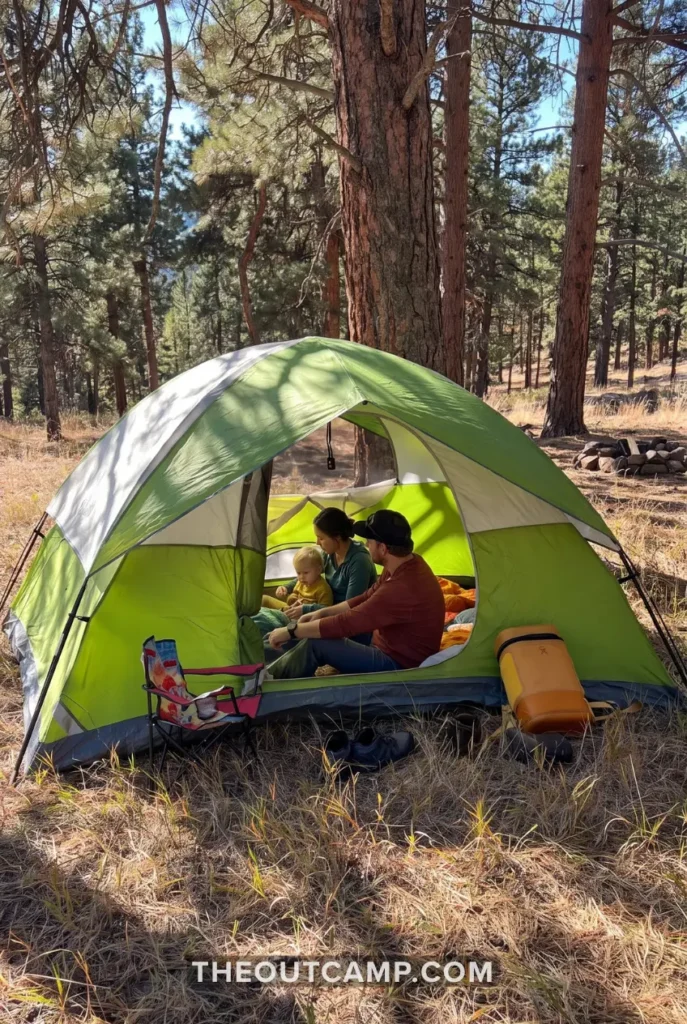
Coleman Sundome 4 Camping Tent Specs
- Size: 9 x 7 ft, floor area 63 sq ft
- Packaged Weight: ~8 lb 8 oz
- Entrances: 1 door
- Windows: 2 windows plus a ground vent
- Vestibules: None (door awning only)
- Free Standing: Yes
- Season: 3-season
This is the tent most of us have actually owned at some point, and there’s a reason it keeps selling. Coleman’s WeatherTec system — welded floor seams plus an included rainfly — genuinely keeps water out in a normal downpour, not just a light drizzle. Setup takes about 10 minutes solo, no learning curve required.
It’s not fancy. One door, no real vestibule beyond a small awning over the entrance, and the poles are fiberglass rather than aluminum, so they’re more likely to bend if you’re rough with them. For the price, none of that feels like a dealbreaker.
I’ve kept one of these in the garage as the “backup” tent for years. It got pulled out for a last-minute trip when something else was in the shop, and it did exactly what it needed to — kept us dry in a solid overnight rain and went up without any drama. This is the tent I’d hand a first-time camper who isn’t sure yet if this hobby is going to stick. Low risk, does what it says.
Pros: Genuinely affordable, easy solo setup, holds up in real rain, fits a queen air mattress
Cons: Single door, minimal vestibule, fiberglass poles won’t last as long as aluminum
3. ALPS Mountaineering Lynx 4 — Best 4 Person Tent for Bad Weather
Hunting for the best 4 person tent that can handle genuinely bad weather? This is the one.

ALPS Mountaineering Lynx 4 Camping Tent Specs
- Size: 7 ft 6 in x 8 ft 6 in, floor area 64 sq ft
- Packaged Weight: 8 lb 7 oz
- Entrances: 2 doors
- Windows: Half-mesh side walls
- Vestibules: 2 (25 sq ft total)
- Free Standing: Yes
- Season: 3-season
Price: ~$180
If you’ve ever gotten rained out in a cheaper tent, this is the upgrade. The 1,500mm rainfly coating and 2,000mm floor coating are numbers you’d normally expect on something twice this price, and factory-sealed seams back it up.
Worth remembering too: a rainfly keeps you dry, but no tent protects you from lightning — NOAA’s outdoor weather safety guide is worth a quick read before any trip where storms are a real possibility.
I’ve run this one through mixed car camping and a few shorter pack-in basecamp trips — actual overnight rain more than once, not just a passing shower — and it stayed dry inside every time thanks to the sealed seams and coated floor. The two-pole clip system lives up to its reputation: solo setup is routinely under 10 minutes once you’ve done it a couple of times, and it’s almost trivial with two people.
The 52-inch peak height is the real trade-off. Lower profile tents handle wind better. Sitting up is fine, but anyone over about 5’10” feels it getting dressed or moving around — there’s some crouching involved. It’s not a tent for someone who wants to stand and change clothes comfortably. The dome shape does make it noticeably more stable in wind than a taller cabin-style tent like the Wawona.
Both vestibules got regular use on my trips — boots, packs, a small cooler, once a dog — and gear stayed dry as long as it wasn’t pressed against the fly. Two doors and two 25-square-foot vestibules is a real convenience with more than one person in the tent; nobody’s climbing over anybody to get out.
If your camping trips have a habit of getting rained on, or you camp somewhere with unpredictable mountain weather, this is the one I’d trust over a taller, flashier tent.
Pros: Genuinely waterproof, aluminum poles, two doors and vestibules, fast two-pole setup
Cons: Low peak height, heavier than it looks for its size, vestibules could be more weather-sealed at the edges
4. Coleman Skydome 4 with Full-Fly Vestibule — Easiest Setup for Beginners
This is my pick for the best 4 person tent for someone who’s never pitched a tent before.
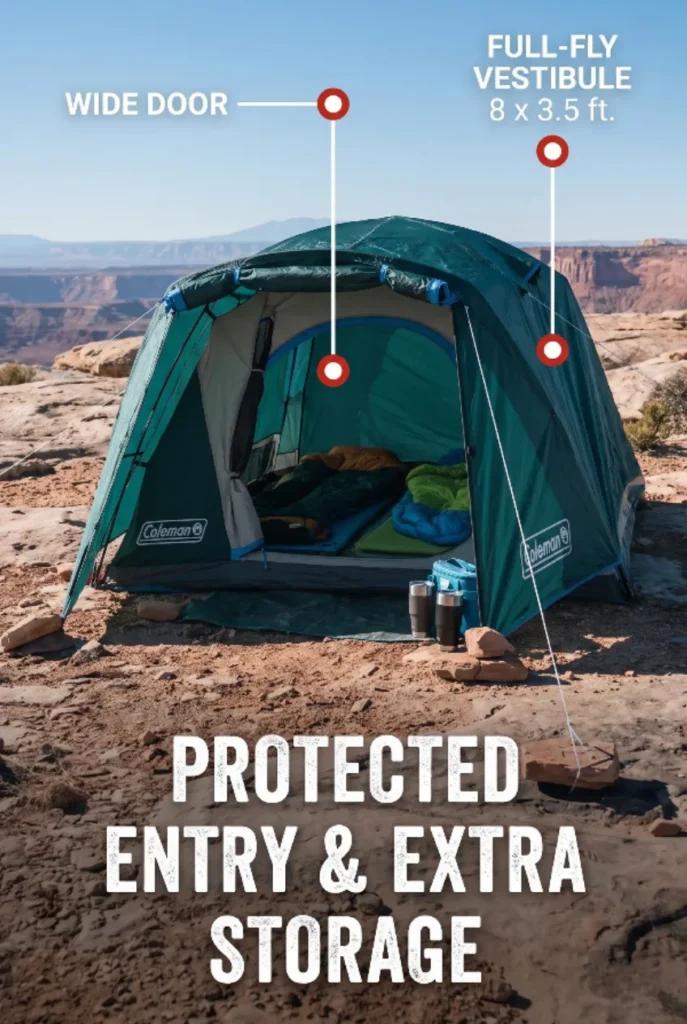
Coleman Skydome 4 Camping Tent Specs
- Size: 96 x 84 in, floor area ~56 sq ft
- Packaged Weight: 13 lb 11 oz
- Entrances: 1 door
- Windows: Mostly mesh body, 2 windows
- Vestibules: 1 (full-fly vestibule)
- Free Standing: Yes
- Season: 3-season
Price: $190
Setup really is the easiest of any tent here. The pole design here does the thinking for you: the poles stay attached to the tent body and fold out into the corner sleeves, so there’s very little guesswork on your first pitch.
Color-coding makes the fly nearly foolproof to orient, and my first solo pitch — staking and guying included — landed around 10 minutes. That’s dropped further with practice. The full-fly vestibule was the pleasant surprise: close to 28 square feet, enough for boots, packs, and a cooler that stayed dry through every rain I hit.
It won’t win points for storage — one door, one interior pocket, and the plastic fly clips feel like the first thing that’ll wear out. But the E-port for running an extension cord to a campground hookup is a nice touch if you’re at a developed site, and the mostly-mesh body keeps things breathable in summer.
For anyone who’s never pitched a tent before and doesn’t want a frustrating first night, this is the one that removes the guesswork.
Pros: Nearly foolproof setup, full-coverage fly actually protects you, E-port for power access
Cons: Only one door, limited storage, plastic hardware feels less durable long-term
5. Kelty Daydreamer 4 — Best for Families with Young Kids
Parents looking for the best 4 person tent that doesn’t double as a 5 a.m. wake-up call should look here.
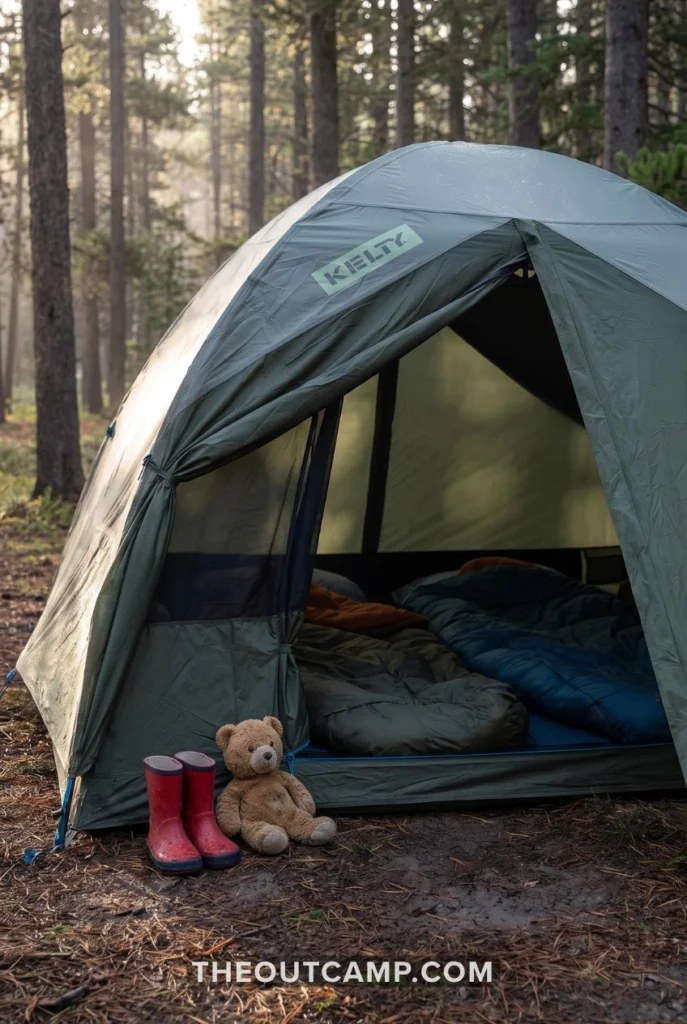
Kelty Daydreamer 4 Camping Tent Specs
- Size: floor area 56.7 sq ft
- Packaged Weight: 13.4 lb
- Entrances: 1 door
- Windows: Mesh body, muted by the blackout fly when closed
- Vestibules: 1 (17.9 sq ft)
- Free Standing: Yes
- Season: 3-season
Price: ~$190
This one solves a problem most tents don’t even try to: kids (and let’s be honest, some adults) who wake up the second the sun hits the tent. Kelty’s Twilight Tech rainfly blocks daylight aggressively enough that owners report sleeping past 8 a.m. even on exposed, sunny sites — a real difference from a standard fly.
The Quick Corner pole system pitches in under five minutes, and the 17.9-square-foot vestibule keeps wet shoes and gear out of the sleeping area. The catch is ventilation — with the blackout fly zipped up, condensation builds faster than in a mesh-heavy tent, so it’s better suited to fair-weather trips than extended rain.
If you’ve ever had a 6 a.m. wake-up call from a toddler who thinks sunrise means it’s time to get up, you’ll understand why this tent earns its spot on the list.
Pros: Genuinely blocks morning light, fast setup, decent vestibule
Cons: Poor ventilation with the fly closed, thin floor needs a footprint, not built for sustained rain
6. Marmot Limestone 4P — Best Splurge, Built to Last
If budget isn’t the deciding factor, this is arguably the best 4 person tent for someone who wants to buy once.
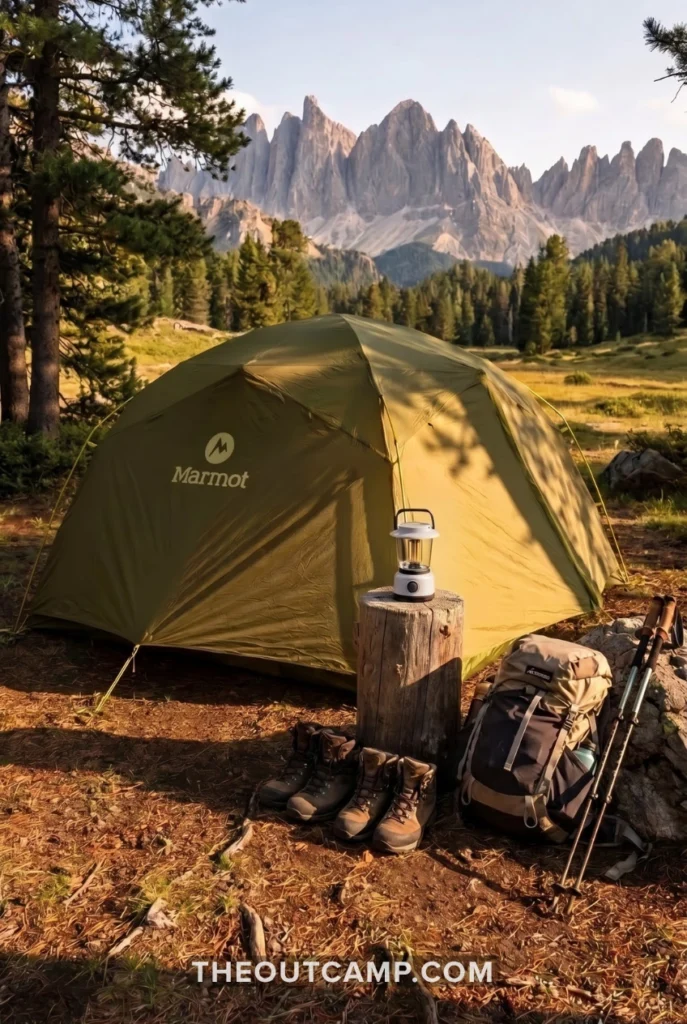
Coleman Skydome 4 Camping Tent Specs
- Size: floor area 60 sq ft
- Packaged Weight: ~11 lb 11 oz
- Entrances: 2 doors
- Windows: Large mesh windows plus roof vents
- Vestibules: 1 large front vestibule (21 sq ft)
- Free Standing: Yes
- Season: 3-season
Price: $479 list, often discounted.
Marmot backs this one with a lifetime warranty, and the build quality suggests they mean it. DAC DA17 aluminum poles, a 150-denier floor, and a fully seam-taped rainfly with vents put this in a different durability tier than most of the tents on this list. The 21-square-foot front vestibule is generous enough for a full gear haul.
Color-coded Easy Pitch clips make setup more approachable than the premium price might suggest, though you’re still looking at 15 minutes rather than the Skydome’s 10.
This is the tent for a family that camps often enough to justify paying once instead of replacing a budget tent every couple of seasons.
Pros: Lifetime warranty, top-tier materials, roomy vestibule, good ventilation
Cons: The most expensive tent here, still needs re-waterproofing eventually like any tent
One thing worth flagging across all six picks: every tent on this list is a 3-season tent, not built for snow or sub-freezing nights. Fine for spring through fall almost anywhere in the US, but if you’re heading out somewhere cold, check out how to stay warm in a tent for what you’ll need to add on top of the tent itself.
Can a 4-Person Tent Actually Fit 4 People?
Technically, yes. Comfortably? Almost never — and every tent maker knows it. That “4-person” rating usually assumes four sleeping bags laid shoulder to shoulder on bare floor, with zero space for gear, shoes, or an air mattress.
In practice, most of these tents feel genuinely comfortable for 2 adults plus a small kid or two, or 2 adults with real gear space. If you’re regularly fitting 4 full-grown adults and their stuff, size up to a 6-person tent instead — you’ll thank yourself on night two. If you’re specifically wondering how your setup will fit, my guide on what size air mattress fits in a 4-person tent breaks down the real usable floor space once you subtract the walls’ slope.
How Much Space Do You Actually Need?
This is really the core question behind picking the best 4 person tent for your situation.
Floor square footage tells you less than it seems to. A tent with steep, near-vertical walls (like the Wawona) uses its listed square footage far better than a low dome tent with the same number, because the space near the walls is actually usable instead of just where the roof meets the floor.
Peak height matters more for daytime comfort than sleeping. If you’re mostly in the tent to sleep, a lower-profile tent like the ALPS Lynx handles wind better and costs less. If you’re riding out a rainy afternoon inside, a taller tent you can actually stand up and change clothes in is worth the trade-off.
What to Look For Beyond Size
Vestibules matter more than people expect until they’re stuffing wet hiking boots into the sleeping area at 11 p.m. A covered vestibule — even a small one — keeps muddy gear, coolers, and shoes out of the space where you’re sleeping.
Rainfly coverage is the single biggest predictor of whether you stay dry. A partial or “half” fly ventilates better on hot nights but leaves you exposed in sideways rain. A full-coverage fly like the ALPS Lynx or Marmot Limestone costs you a bit of airflow but earns its keep the first time weather turns.
Pole material is a quiet durability signal. Aluminum poles bend back into shape and rarely snap outright; fiberglass poles (common on budget tents like the Sundome) are more prone to cracking after a few seasons of regular use. That’s a fair trade if you’re only camping once or twice a year — less so if you’re out most weekends.
Door style is a smaller factor, but it shows up in daily use — a hinged door swings and zips differently than a standard curved-zip door, and it matters more than you’d expect when you’re getting in and out at night without waking everyone up. If that’s something you care about, my best tents with hinged doors guide breaks down the difference.
Once your tent’s picked, my car camping setup guide covers the rest of what actually makes a campsite comfortable — from where to pitch relative to your car to keeping the kitchen area separate from the sleeping zone.
Frequently Asked Questions
What size tent do I need for a family of 4?
If you want everyone to sleep comfortably with room for gear, size up to a 6-person tent. A genuine 4-person tent works well for 2 adults and 1–2 young kids, or 2 adults with a real gear load.
Is a 4-person tent good for a couple?
Yes — this is honestly where 4-person tents shine. Two adults get generous room to spread out, store gear inside instead of the car, and still have space for a dog or a small kid on occasion.
What’s the difference between a 4-person camping tent and a 4-person backpacking tent?
Backpacking tents prioritize low weight above everything else, often using thinner fabrics and smaller footprints to shave ounces for the trail. Car camping tents like the ones on this list trade a few extra pounds for more floor space, taller ceilings, and tougher materials — since you’re not carrying it further than the trunk to the campsite.
How waterproof does a 4-person tent need to be for regular camping?
For most car camping, a full-coverage rainfly with taped seams (like the ALPS Lynx or Marmot Limestone) is enough to handle a multi-day storm. If you mostly camp in dry summer conditions, a partial-fly tent like the Coleman Sundome will be fine and gives you better airflow.
Are expensive 4-person tents actually worth it?
If you camp more than a handful of times a year, yes — a $450+ tent with aluminum poles and a real warranty will outlast two or three budget tents. If you camp once or twice a summer, a $100–200 tent does the job without the extra cost.
Which One Should You Actually Buy?
If you only take one thing from this list: match the tent to how you actually camp, not to the biggest number on the tag. A couple who camps three weekends a year doesn’t need the Marmot Limestone’s lifetime warranty. A family that’s rained on every single trip absolutely needs the ALPS Lynx’s real weatherproofing over the Sundome’s basic rainfly.
Whatever you land on, give it one full setup in your backyard before the first trip. It’s a lot less frustrating to figure out a stuck pole clip on your own lawn than in a campground parking lot at dusk.