

Getting a good night’s sleep while camping is essential. It’s more important than most people realize.
When you don’t sleep well, the following day can be challenging. You may lack the energy for hiking, feel impatient with the kids, and struggle to fully enjoy the trip you’ve planned for weeks. Often, the problem is simple: you forgot to bring a proper pillow.
Some campers use a jacket as a headrest, while others roll up a hoodie. This may seem like a smart solution until 3 a.m. when your neck is twisted at an awkward angle, making it difficult to fall back asleep.
A good inflatable camping pillow addresses this problem. It’s designed for outdoor use, it provides genuine support for your head and neck, and for car campers, it takes up almost no space in your trunk.
In this post, we’ll explain what inflatable camping pillows are, how they compare to other types, and how to find the right one for your sleeping style.
This article contains affiliate links. If you purchase through these links, I may earn a small commission at no extra cost to you. My recommendations are based on personal experience and thorough testing. Read my full disclosure for details.
Do You Need an Inflatable Camping Pillow?
For most campers, the answer is yes. Folded clothes and stuff sacks do not offer adequate neck support, but a dedicated camping pillow does. It helps keep your spine aligned while you sleep, resulting in less stiffness and more energy the following day, whether you’re hiking a trail in your favorite National Park or simply relaxing at the campsite.
Types of Camping Pillows
There are three main types of camping pillows, each type functions differently. The best option will depend on your sleeping style and the space you have available. Just like your sleeping bag, your pillow is part of your overall sleep system.
Inflatable Camping Pillows
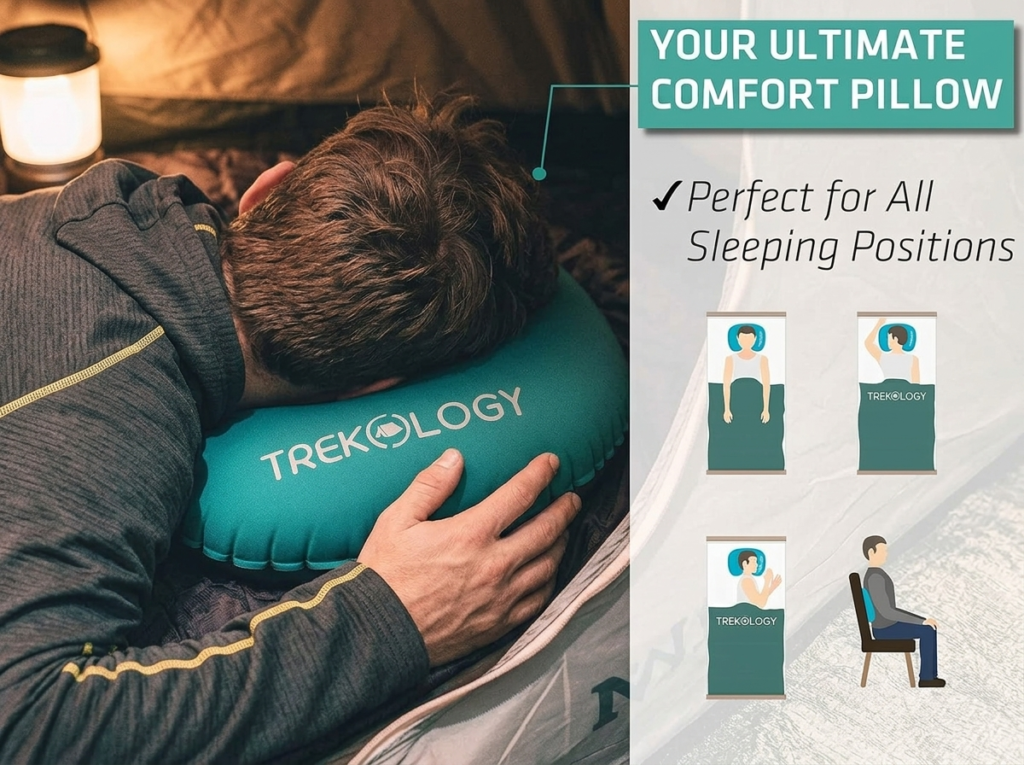
An inflatable camping pillow is compact, typically compressing to the size of a Coke can and weighing very little. You inflate it through a small valve, adjust the firmness to your liking, and it’s ready for use.
A popular choice is the Sea to Summit Aeros Premium. It packs down to the size of a fist, has a soft brushed fabric exterior that feels warm against your face, and its three-way valve makes it easy to adjust the firmness. If you’re looking for something more affordable, the Trekology ALUFT 2.0 is available for around $20 on Amazon and is a good starter inflatable.
Foam and Compressible Camping Pillows
A compressible camping pillow or foam camping pillow is filled with shredded foam or down-alternative material and can be packed into a stuff sack. While it doesn’t compress as much as an inflatable pillow, it offers a much more home-like sleeping experience. It provides superior neck support, has a more natural loft, and requires less adjustment.
New foam pillows may emit a slight chemical odor when first removed from their packaging. Allow them to air out for 24 hours before your trip. This detail is not mentioned in the product listing. While the smell is not harmful, it can be unpleasant when you’re trying to fall asleep.
Hybrid Camping Pillows
Hybrid pillows combine an inflatable base with a foam or fiber top layer, aiming to resolve the cold face and feel issues associated with pure inflatables while maintaining a compact design. They provide a reasonable balance, but this compromise comes at a higher price, typically ranging from $40 to $60.
The NEMO Fillo is the most popular hybrid option. It features an inflatable air core and a foam top layer, which makes it feel softer than a regular inflatable. It still packs down to a manageable size.
Camping Pillow Comparison
| Type | Comfort Level | Pack Size | Best Sleep Position | Best For |
|---|---|---|---|---|
| Inflatable | Medium | Tiny (soda-can small) | Back sleepers, stomach sleepers | Tight packing, multi-day trips |
| Foam / Compressible | High | Moderate (soccer-ball) | Side sleepers, bad backs | Car camping, comfort-first campers |
| Hybrid | Medium-High | Small-Medium | All positions | Campers who want adjustability + softness |
How to Choose the Right Camping Pillow
When choosing a camping pillow, think about these factors:
Sleep Position and Neck Support
This part is crucial for spinal alignment, yet many campers overlook it.
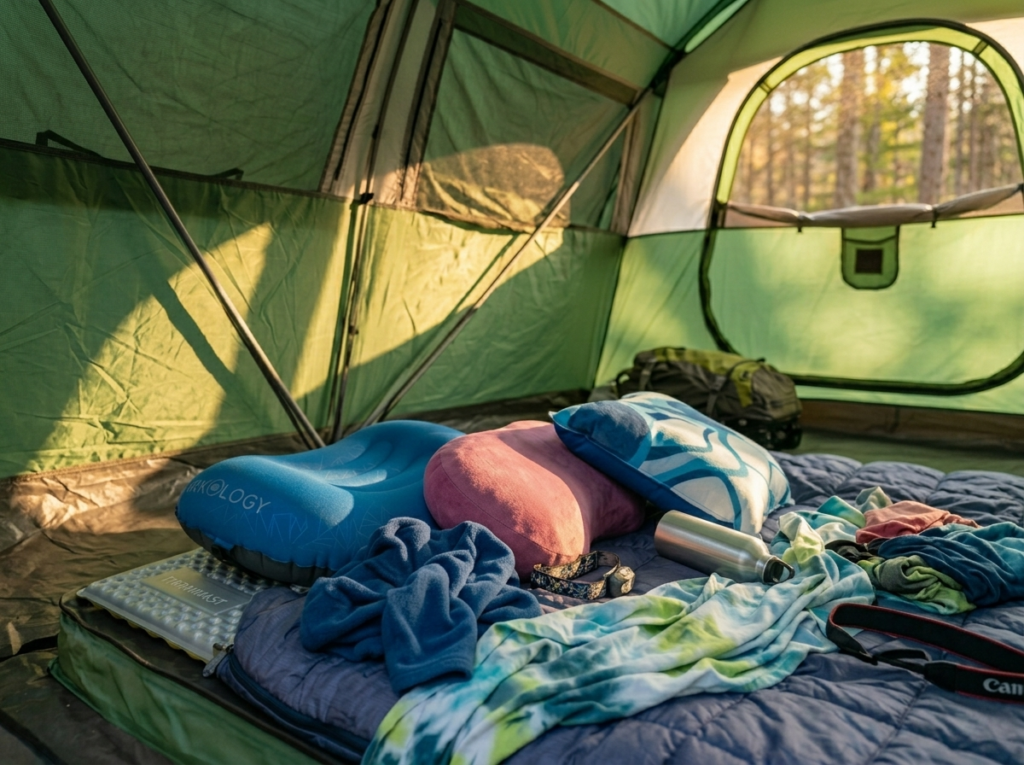
Side sleepers require more loft, needing greater height between their heads and the sleeping surface. An underfilled inflatable pillow or a flat foam pillow allows the neck to drop sideways throughout the night. Opt for a height that is slightly greater than you think you need. Back sleepers benefit from medium support, as the weight of the head is better distributed, making firmness easier on the neck. Stomach sleepers should choose the flattest option available, as a thick inflatable pillow can twist the neck into an uncomfortable angle by morning.
If neck support or back pain is already a concern at home, a compressible foam pillow is typically the better choice for outdoor use as well, as it feels closer to what your body is accustomed to.
Camping Surface: Cot, Air Mattress, or Pad
The surface of your pillow affects how it feels overnight.
Slick air mattresses and smooth cot tops can cause pillows to slide around, leaving you waking up in the middle of the night with your head halfway off the pillow. If this occurs, consider using a pillow with a textured cover or placing a small camp towel underneath it. This simple solution works every time.
Sleeping pads generally offer better grip and usually do not pose any issues.
Washability and Pillow Cover
Most camping pillows come with a removable pillowcase or have a washable outer fabric. That matters more than people expect — especially for families, especially on multi-day trips, especially in humid weather.
A moisture-resistant, quick-dry outer layer keeps the pillow from holding sweat and condensation. If your pillow doesn’t have a removable cover, bring a spare pillowcase from home. It also makes any inflatable feel softer against your face, which partly solves the cold-surface problem.
The Car Camping Advantage: You Don’t Need Ultralight
Every backpacking guide recommends inflatable camping pillows because every ounce matters when you’re carrying a 30-pound pack for six miles. However, when you drive to a campground and park your car just 50 feet from your tent, everything changes.
You can bring a full-size compressible pillow or your actual pillow from home. If you have a car, packing size isn’t your primary concern; sleep quality is.
For short trips in dry weather, your regular home pillow is suitable. For longer journeys or humid climates, a camping-specific pillow handles moisture more effectively and dries out more easily if it becomes damp.
The backpacking community has long been at the forefront of discussions about camping pillows. Just keep in mind that their priorities are ultralight and compact, not necessarily yours.
Tips for Using a Camping Pillow
Adjust your inflation level before the temperature drops for the night. Air contracts as it cools, so a pillow that felt comfortable at 9 PM may feel flat by midnight. Add a bit more air than you think you need while it’s still warm. If you camp in cold weather, here are more ways to stay warm at night.
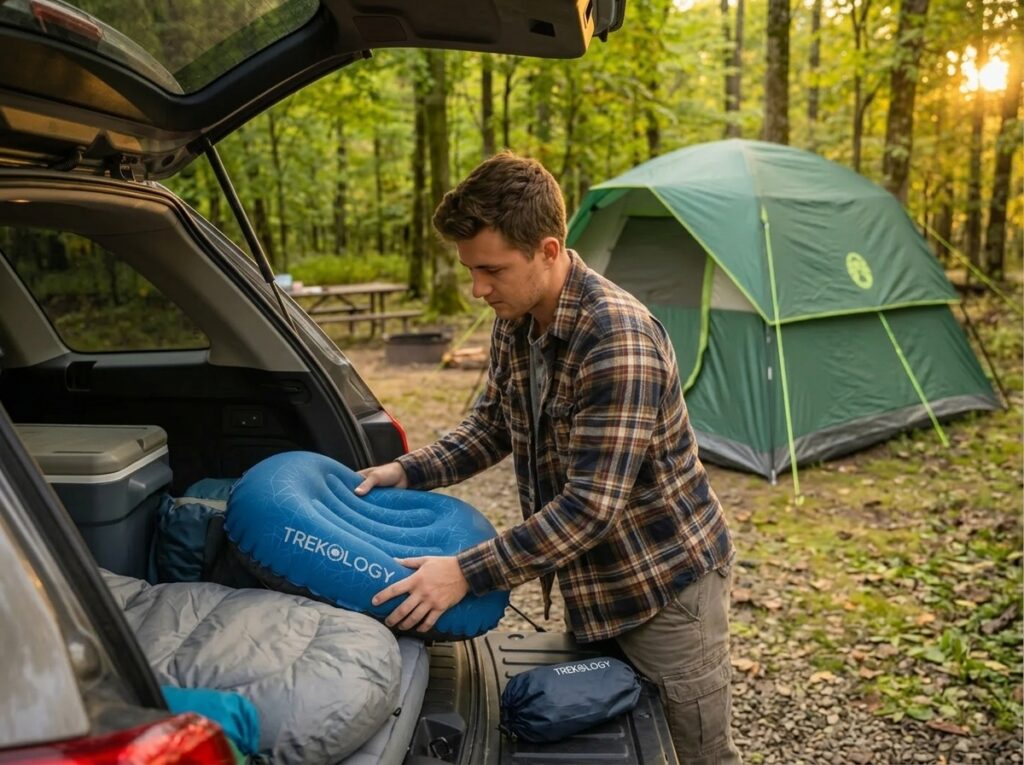
Always use a pillowcase or cover, even if the pillow already has one. This adds softness, keeps the pillow cleaner, and makes any inflatable feel less rubbery against your skin.
Store foam pillows in a dry place. Moisture can break down the fill over time. If your pillow got damp during the trip, make sure to air it out completely before packing it away.
If you’re camping in a National Park or on public land, getting proper rest will help you make the most of your time outdoors.
Are Camping Pillows Worth It?
Honestly, for most people, the answer is yes. Waking up with a stiff neck on the first day of a three-day trip can ruin everything, and you won’t recover from that by day three.
However, here’s what I would advise a friend: if you’re car camping and your regular pillow from home fits in the trunk without forcing you to leave something else behind, try using that first. This is particularly true for short weekend trips in dry weather. If it works out, that’s great. But if it gets damp or you’re short on trunk space, that’s when a camping-specific pillow becomes a sensible choice.
The camping pillow proves to be more beneficial the longer the trip lasts, the wetter the climate is, and the tighter the packing situation becomes. For a single overnight stay in good weather? Honestly, it’s a close call.
What to Do Next
Figure out how you sleep first, whether you sleep on your side, back, or stomach. This will significantly narrow down your options. If you sleep on your side and experience any neck or back issues, opt for a compressible foam pillow. For back or stomach sleepers seeking a compact option, an inflatable pillow is suitable. If you’re uncertain, a hybrid pillow provides a good compromise.
If this is your first time car camping and you already have a pillow that fits in your car, just bring that along. You can always purchase a camping pillow later once you determine if you truly need one. It’s wiser to spend that $30 on something else for your first trip and upgrade later when you better understand your actual needs. To enhance the rest of your sleep setup, consider this guide on making tent camping more comfortable.