
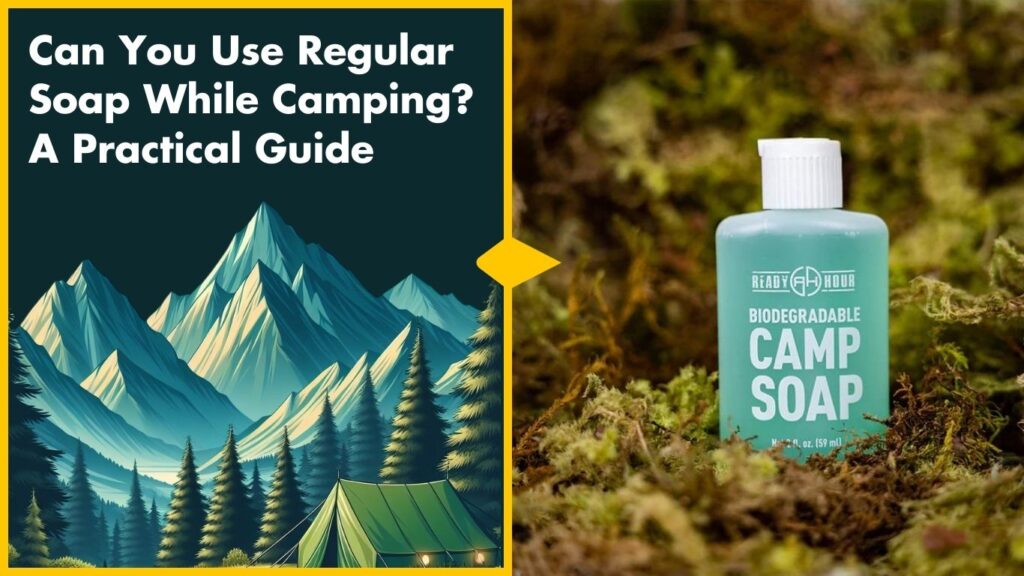
When people pack for a camping trip, they usually toss their regular soap into the bag without a second thought. I used to do the same. But after camping in U.S. National Parks for years—mountain lakes, freshwater rivers, desert canyons, and forested trails—I learned that using regular soap outdoors isn’t always safe for the environment or even allowed. This guide explains exactly when regular soap is acceptable, when it isn’t, and what alternatives are both eco-friendly and practical for real campers. If you’re preparing for your next trip, you may also want to read Camping Hygiene Tips.
This article contains affiliate links. If you purchase through these links, I may earn a small commission at no extra cost to you, helping support my work. My recommendations are based on personal experience and thorough testing. Read my full disclosure for details.
Can You Use Regular Soap While Camping?
You can use regular soap only in places where wastewater is properly managed, such as established campgrounds with sinks, designated wash areas, or RV bathrooms. In natural environments—especially near lakes, rivers, or backcountry trails—regular soap is harmful and should be avoided. Even biodegradable soaps require special usage to protect streams and wildlife.
If you’re preparing for a trip, consider carrying a compact hygiene kit like the Sea to Summit Pocket Shower to wash safely away from water sources.
Why Regular Soap Isn’t the Best Choice Outdoors
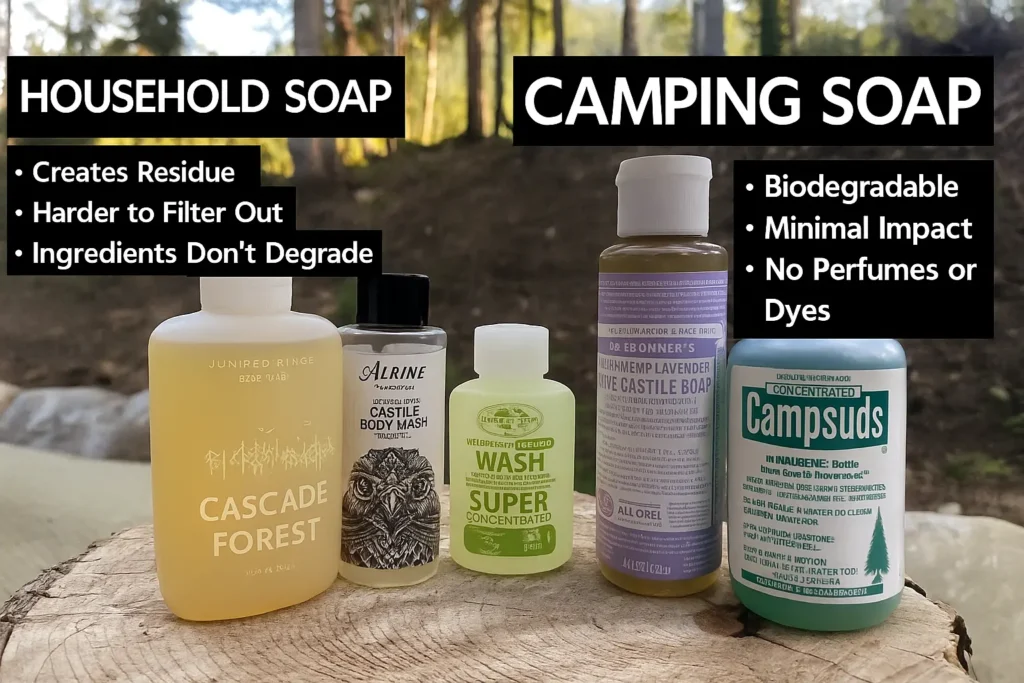
Most household soaps are made for indoor plumbing systems where wastewater is treated before returning to the environment. Once you take that same soap into nature, it enters an ecosystem that has no filtration system. Regular soaps contain surfactants, fragrances, preservatives, and synthetic compounds that linger in water and soil much longer than people realize.
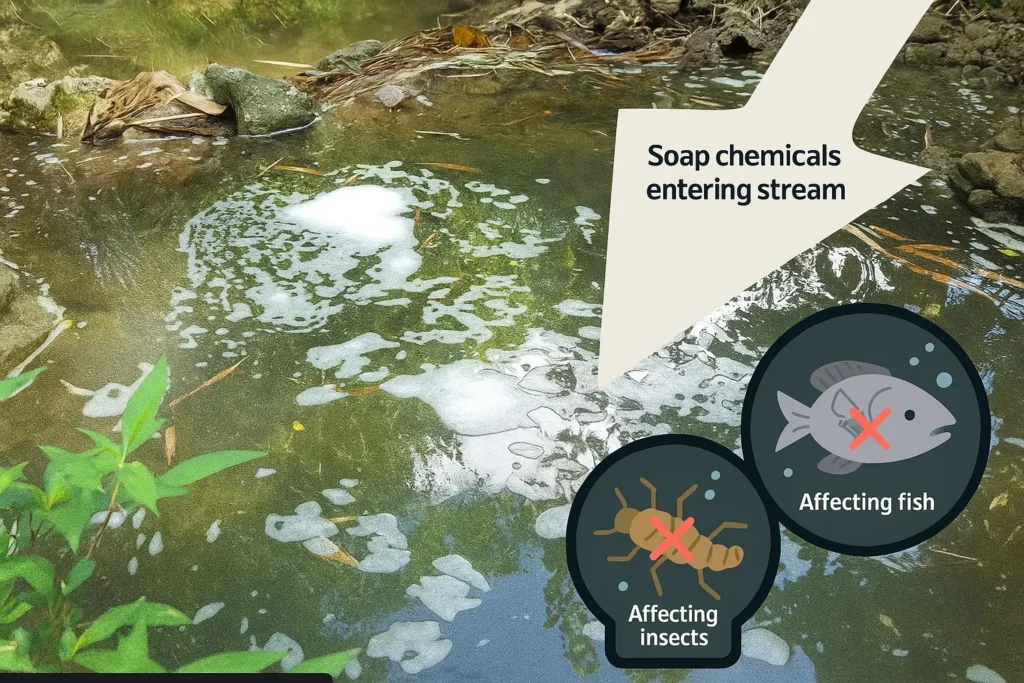
When you rinse yourself or your dishes in a natural water source, these chemicals instantly spread through the water. Wildlife drinks it, aquatic insects absorb it, and the soil struggles to break it down. This can lead to reduced oxygen levels in streams, algae growth, and harm to fish gills and fragile microorganisms that keep rivers healthy.
To avoid harming wildlife, many campers prefer switching to a nature-safe option like Dr. Bronner’s Pure Castile Soap, which is concentrated and eco-friendly when used properly.
As someone who camps frequently near alpine lakes, I’ve seen rangers warn groups simply because they washed their hands near the shoreline with regular soap. One mistake can impact water quality for months.
If you’re trying to improve your overall hygiene setup on trips, you may also like my guide on Best Camping Kitchen Setup Ideas for Easy Outdoor Cooking since dishwashing is usually where most campers misuse soap.
Even Biodegradable Soap Isn’t Safe in Water
There is a huge misconception online that “biodegradable soap is safe for rivers.” It isn’t.
Biodegradable soaps break down only in soil, not in water. If used directly in streams or rivers, they behave almost the same as regular soap. The difference is that biodegradable soap decomposes faster on land if the soil is warm, filled with microbes, and exposed to oxygen.
This is why Leave No Trace and the National Park Service both maintain the same rule: use soap away from water, even if it’s biodegradable.
What Leave No Trace & National Parks Recommend
Leave No Trace (LNT) provides the framework that most U.S. camping areas follow. Their recommendation is simple and non-negotiable:
Wash at least 200 feet (about 70 adult steps) away from any natural water source. In my trips, I’ve witnessed foamy residues in popular spots, which underscores why LNT advises against it.
If you’re planning a car-camping trip, organizing your hygiene gear in a compact hanging toiletry bag makes it easier to wash at proper distances.
The National Park Service supports this rule and adds a few more specifics. Most federal, state, and national parks allow soap only at:
- designated wash stations
- bathroom sinks
- RVs or trailers with holding tanks
Using soap in creeks, waterfalls, or lakes is not just discouraged—it’s often punishable with fines. Rangers genuinely enforce these guidelines because one camper’s soapy rinse can affect an entire water system.
If you’re planning a car-camping trip, you may also want to optimize your sleeping setup by checking How to Sleep Comfortably in Your Car While Camping.
As someone who has spent over a decade camping in national parks—from Zion to Glacier—I’ve learned that these guidelines aren’t arbitrary. They come from real ecological data and decades of conservation research.
You can safely use regular soap at modern car-camping campgrounds that provide proper drainage. If a campground has a bathroom with sinks, showers, or dishwashing stations, the wastewater goes into a treatment or septic system. That means regular soap—like Dove, Dial, or Ivory—is completely acceptable.
It’s also fine inside an RV or camping trailer. For those planning to sleep in vehicles, guides like What Size Mattress Fits In A Honda Odyssey? and Will a Queen Mattress Fit in a Minivan? can help.
In short, if your soap will end up in a man-made drainage system, there’s nothing wrong with using your everyday bar or liquid soap.
When You Should Avoid Regular Soap Completely
In backcountry or dispersed camping, there is no plumbing and no filtration—just raw nature. Regular soap should not be used here at all. If you’re heading into the backcountry, understanding essentials like safe fire building is also important. Here’s a full guide on How to Build A Campfire The Right Way.
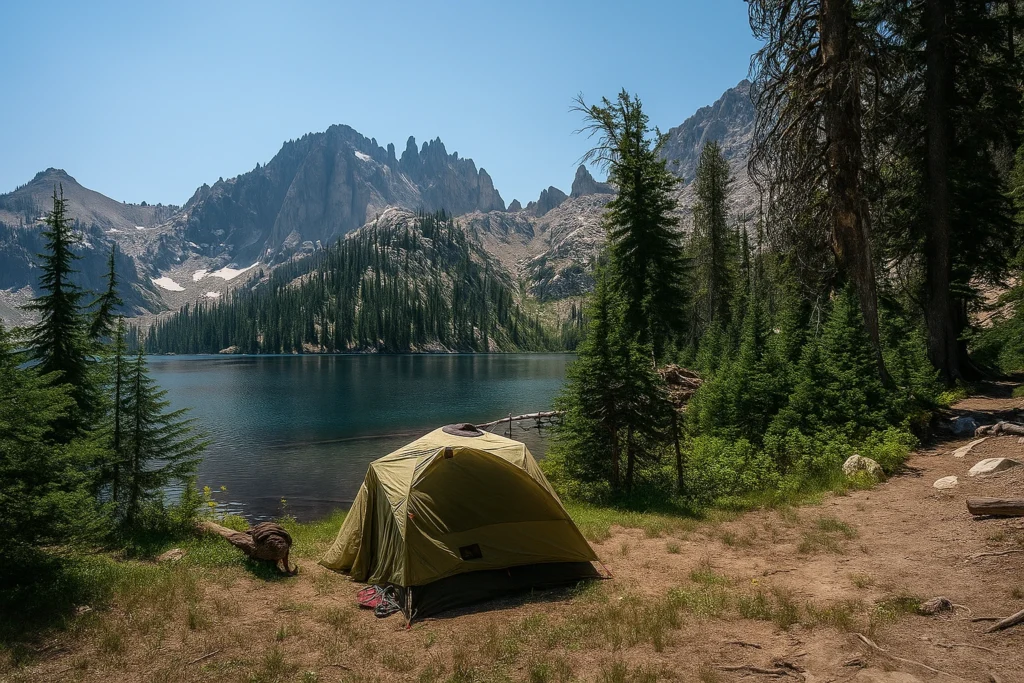
Backpacking areas, alpine meadows, desert wash zones, and primitive lakeshores are the most sensitive environments. These locations rely on extremely delicate soil microorganisms that can’t break down modern soaps quickly.
Even small streams and creeks, which look pure and harmless, are vulnerable. Aquatic insects in these waters are directly affected by surfactants found in household soaps. Once they die, fish and amphibians lose one of their main food sources.
If you’re camping in a fragile ecosystem—especially high-elevation lakes or desert environments—soap use must be minimized or avoided entirely.
Safer Alternatives to Regular Soap for Camping
There are eco-friendlier ways to stay clean without damaging ecosystems. Biodegradable soaps such as Dr. Bronner’s Pure Castile, Campsuds, or Sea to Summit Wilderness Wash can be used, but they require proper technique. Always wash at least 200 feet away from natural water and use just a few drops at a time. A small amount is surprisingly effective.
On shorter trips, water-only cleaning works well. I’ve cleaned my face, hands, and dishes using only warm water countless times—no soap needed. Unscented baby wipes or compostable wipes also help, especially for quick hygiene. Just make sure to pack them out.
For quick cleanup, compostable unscented biodegradable wipes are great, especially when water is limited.
A small travel-size hand sanitizer is also useful for disinfecting without soap, but only for killing germs—not for cleaning dirt or oil.
How to Wash Dishes the Right Way While Camping
If you need to wash dishes outdoors, the safest approach is the traditional three-step cleaning system using a tiny amount of eco-friendly soap. Start by wiping off all food scraps. Then wash your dishes in warm soapy water away from any natural water source. Rinse them with clean water, then sanitize using either boiled water or a small amount of sanitizing solution.
After washing, strain food particles out of the greywater. Dig a small hole and slowly pour the water so the soil can filter it. This method keeps wildlife away from your dishes and prevents pollution.
Disposing of Soapy Water Without Damaging Nature
One of the biggest environmental mistakes campers make is dumping dishwater or bathwater in the wrong place. Soapy water should always be scattered over a wide area. This allows the soil’s natural bacteria to break down the soap more efficiently.
Pouring all your wastewater into one spot can kill grass, attract animals, and cause long-term soil damage. Pouring it near camp or fire pits creates odor and hygiene issues. And dumping it near rivers or lakes can cause pollution instantly.
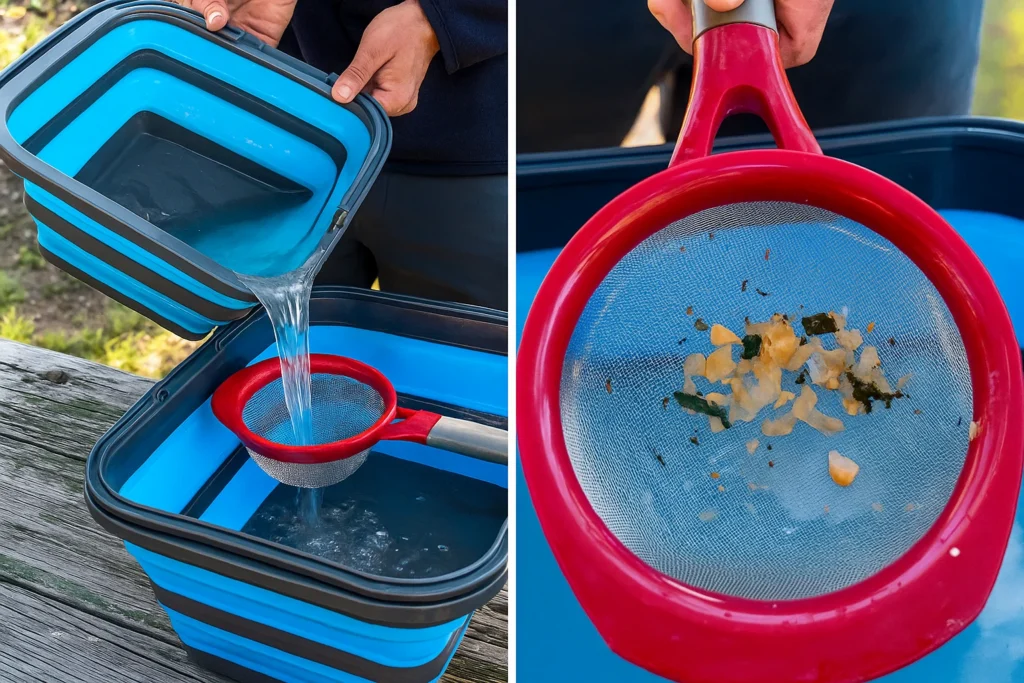
The safest practice is simple: walk 200 feet away from water sources and scatter your greywater in a wide arc.
Recommended Eco-Friendly Soaps for Camping (2025 Guide)
If you want products that perform well outdoors while minimizing ecological impact, a few stand out. Dr. Bronner’s Pure Castile Soap is one of the most versatile options—it works for body wash, dishes, laundry, and even cleaning gear. Campsuds is a classic among backpackers because it is ultra-concentrated and lightweight. Sea to Summit’s Wilderness Wash is fragrance-free and gentle for sensitive skin.
If you prefer a DIY approach, you can dilute castile soap with warm water and add a drop of tea tree oil for a natural, biodegradable cleaning solution.
My Real Experience: What I Actually Carry and Use
After years of camping across the United States, I’ve developed different hygiene routines for different styles of trips. For car camping, I take regular soap because bathrooms handle wastewater properly. For dishes, I rely on eco-friendly concentrated soap and wash in designated sinks.
Backpacking is different. I avoid soap on most backpacking trips, using warm water and a small scrubbing cloth instead. For personal hygiene, a drop of castile soap used well away from water sources is enough. I also carry unscented wipes for a quick refresh, especially on hot days.
I stopped using scented soaps completely while camping because they attract wildlife. I also stopped burying wipes after learning they take years to break down in soil. Packing them out is simply the responsible choice.
Common Soap Mistakes Campers Often Make
One of the most harmful habits I still see is washing directly in streams. Even people who mean well often assume biodegradable soap is harmless. It isn’t. Another common mistake is pouring dishwater near tents or picnic tables. This attracts animals, creates odors, and spreads bacteria. A small collapsible water bucket helps you carry water away from sources and prevents these mistakes.
Using too much soap is another issue. A pea-sized amount is enough for most outdoor purposes. More soap does not mean better cleaning—it just means more pollution to manage.
FAQs:
Here are some common questions that campers might have about using soap while camping, and their answers:
Final Verdict — Which Soap Should You Use While Camping?
If you’re camping in the USA, here’s the safest and most practical approach: use your regular soap only in places with proper drainage, such as established campgrounds or RV facilities. Avoid all soaps near natural water sources and be extremely cautious in backcountry locations. Biodegradable soaps are useful but still require responsible handling.
By following Leave No Trace principles and respecting National Park guidelines, you protect wildlife, keep water sources clean, and ensure the outdoors stays beautiful for future generations. Cleanliness shouldn’t come at nature’s expense—especially when simple, eco-friendly practices can make such a big difference.
I hope this article has helped you. If you have any feedback or questions, please let me know. 😊